
Chemistry Seminar, Presented by Dr. Venkat Kapil, University College London
Connect via Zoom here!
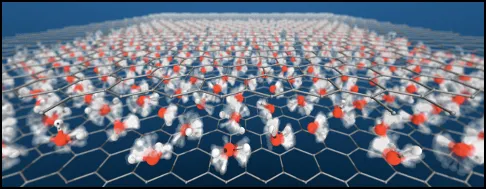
Machine Learning for Full-Quantum Simulations of Condensed Phases and Interfaces: application to the first-principles phase diagram of nanoconfined water
Presented by Dr. Venkat Kapil
Abstract:
Understanding the microscopic structure, dynamics, and reactivity of condensed-phase and interfacial systems is essential for fields ranging from biochemistry to battery science and catalysis. While quantum mechanical simulations, in theory, provide predictive accuracy, incorporating all relevant quantum effects in condensed-phase systems at finite temperatures has remained computationally prohibitive.
In this talk, I will present our recent progress in developing machine-learning (ML) approaches that efficiently and accurately address these challenges. These include ML interatomic potentials approaching the accuracy of correlated electronic structure theory at a fraction of their cost [1], physics-based ML models of electronic properties such as dielectric response tensors for vibrational spectroscopy [2], and ML quantum effective corrections to Born-Oppenheimer potentials for describing quantum statistics and approximate dynamics at a classical cost [3]. As an application, I will demonstrate a fully quantum description of the phase behaviour of nanoconfined water [4]. This system, relevant to water treatment, catalysis, and battery sciences, exhibits several anomalous properties and hitherto has been poorly understood due to inaccuracies in simulations. Our findings reveal that monolayer water displays rich phase behaviour and is highly sensitive to the van der Waals pressure exerted by the confining material. We observe ice phases that break conventional ice rules [5] and predict the existence of a superionic phase under significantly milder conditions than in bulk water. This phase exhibits ionic conductivity comparable to or exceeding that of many battery materials, with quantum nuclear motion playing a crucial role [6].
Our work shows that large-scale, fully quantum modelling of condensed-phase and interfacial systems is now feasible, paving the way for quantitative operando studies of processes relevant to clean energy and catalysis that are key to sustainability.
References
[1] Kaur, Della Pia, Batatia, Advincula, Shi, Lan, Csányi, Michaelides, & Kapil (2024). https://doi.org/10.48550/ARXIV.2405.20217
[2] Kapil, Kovács, Csányi, & Michaelides (2023). Faraday Discussions. https://doi.org/10.1039/D3FD00113J [3] Musil, Zaporozhets, Noé, Clementi, & Kapil (2022). The Journal of Chemical Physics. https://doi.org/10.1063/5.0120386
[4] Kapil, Schran, Zen, Chen, Pickard, & Michaelides (2022). Nature. https://doi.org/10.1038/s41586-022-05036-x
[5] Ravindra, Advincula, Schran, Michaelides, & Kapil (2024). Nature Communications. https://doi.org/10.1038/s41467-024-51124-z
[6] Ravindra, Advincula, Shi, Coles, Michaelides, & Kapil (2024). arXiv