
Grandpierre Lecture, Presented by Prof. Daniel Kwabena Bediako, University of California-Berkeley
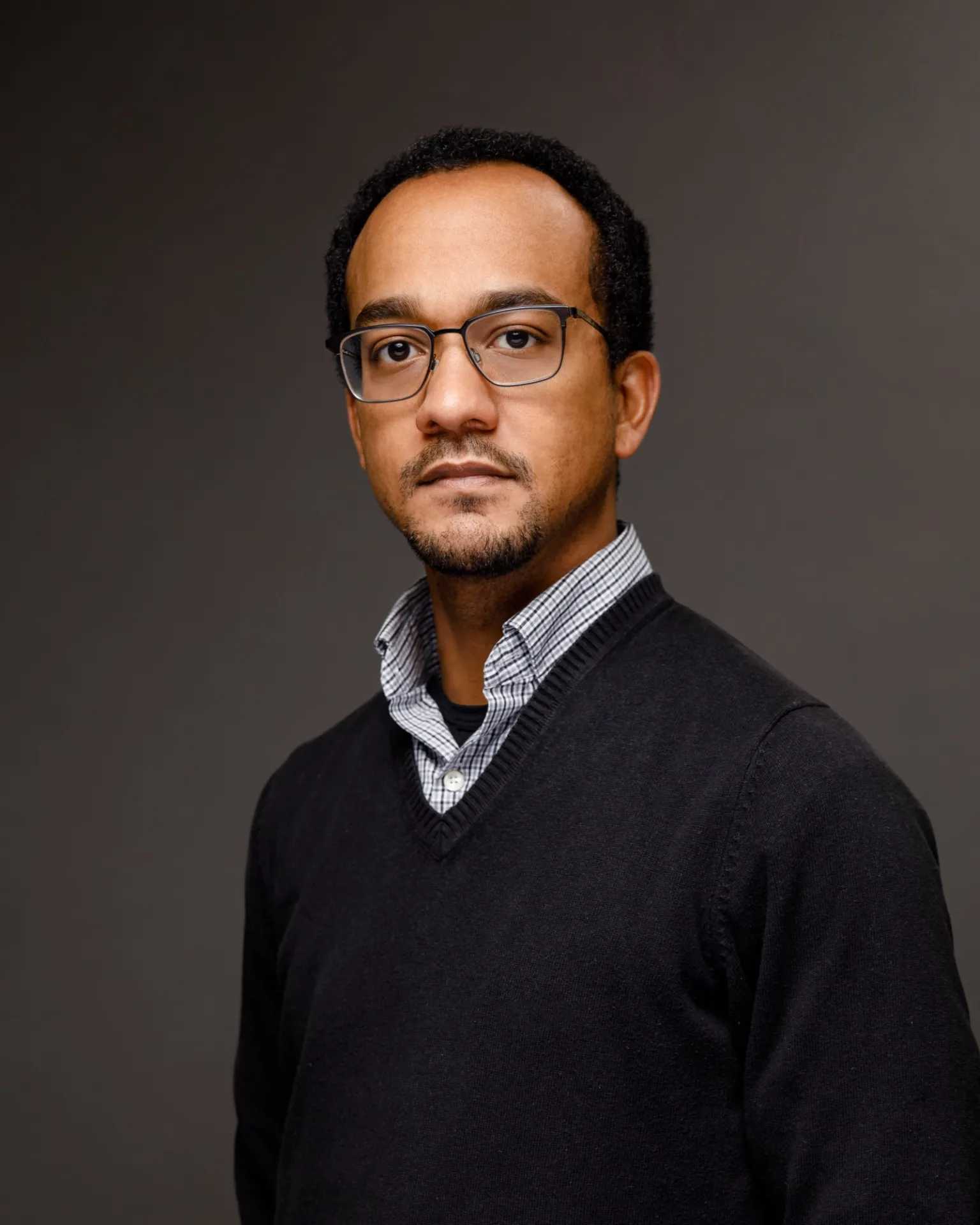
Superlattice engineering of electrochemistry and magnetism
Presented by Prof. Daniel Kwabena Bediako
Hosted by Prof. Xavier Roy
Abstract:
The invention of modular materials that are amenable to deterministic, atomically precise manipulation is a pre-requisite for fundamental advances in both electronics and energy conversion/storage. The control of electronic structures at electrode–electrolyte interfaces is key to efficient electrochemical energy conversion processes, and magnetic solids offer some of the most promising solutions to accelerating energy demand by electronic/computing systems. This talk will describe recent insights into controlling these phenomena using two approaches involving the construction of inorganic “superlattices” in 2D materials: (1) We have shown how moiré superlattices of atomically thin layers provide a distinctive platform for manipulating interfacial electron transfer owing to the angle-dependent control over flat electronic bands and spontaneous strain relaxation. (2) We have developed topotactic routes to create two-dimensional magnets and ultraclean magnetic heterostructures that have no bulk analogue. Our work demonstrates how superlattice engineering of bulk crystals can be used to design and pattern macroscopic transport responses in intercalation compounds.
Read more about the Bediako Lab here